How to Prevent Frozen Pipes in Riverside, NJ
Which pipes freeze first in an older river town house, why an open cabinet door matters, how to thaw a line safely, and what a burst pipe really costs.
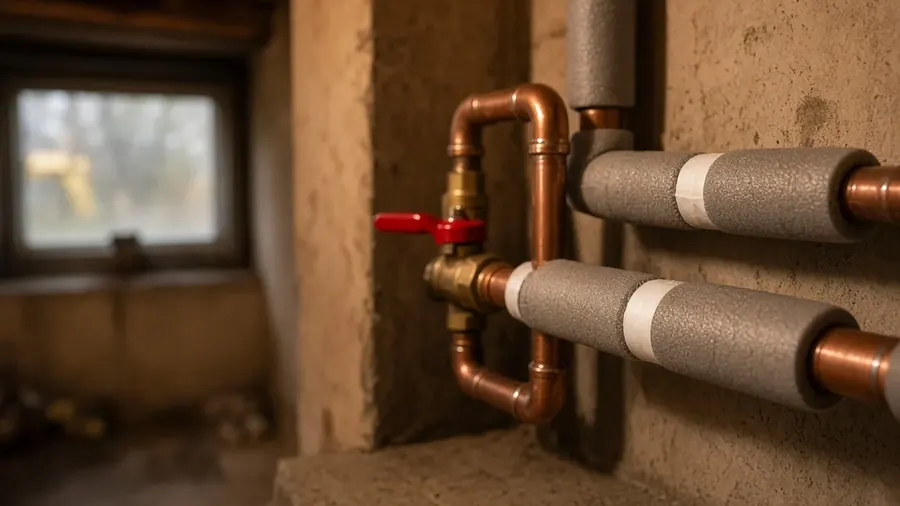
Every January I get the same call, and it usually starts with "the pipe was fine last year." In a town full of houses built before the Second World War, the pipe that bursts is almost never the one you thought about.
Which pipes freeze first
Water freezes in the places where cold air reaches a pipe that is not protected. In Riverside houses, that tends to be:
- Pipes against an exterior wall, especially in a kitchen or bathroom that was added onto the back of the house.
- Any run in an unheated basement, crawlspace, garage or enclosed porch.
- Hose bibs and the short run of pipe feeding them.
- Pipes in an attic, or in a soffit where insulation was pulled back to run a wire.
- Supply lines under a sink on an exterior wall, which is where the open cabinet door comes in.
The pattern to notice is air. Insulation slows heat moving through a wall, but it does not stop cold air from blowing through a gap. A pipe that sits in a draft is at more risk than a pipe in a cold but still room.
The week before a cold snap
Disconnect the garden hose. If the sillcock has its own shutoff inside, close it and open the outside valve so the line drains. Seal the obvious drafts with foam or caulk: the rim joist, the hole where the water main comes in, the dryer vent, the gap under a basement door. Wrap the vulnerable runs with foam insulation, and if a run is in a really bad spot, add a length of heat cable with a thermostat rather than leaving it plugged in all winter.
Change the furnace filter. This is not about pipes, it is about the furnace keeping up on the coldest night of the year, which is the same night the pipes need it.
When the temperature drops hard
Open the cabinet doors under sinks on exterior walls so room air reaches the pipes. Let a thin stream run from the faucet furthest from where the water comes in, moving water freezes more slowly than still water. Keep the thermostat at one temperature, day and night, rather than setting it back while you are at work.
If you leave for a winter weekend, keep the heat at 55 or above and have someone look in. If you leave for a month, shut the main and drain the system, or hire someone who does it properly.
If a pipe freezes
You will know by the faucet: nothing comes out, or it dribbles. Shut off the water at the main first, then open the faucet so the thawed water has somewhere to go, then warm the pipe with a hair dryer, a space heater kept well away from water, or warm towels. Never use an open flame, and do not use a heat gun on a line you cannot see.
If the pipe has already split, the shutoff is the whole game. Water damage in these houses is usually worse than the plumbing repair: ceilings, insulation, flooring and whatever was stored in the basement.
What a burst pipe actually costs
The plumbing repair itself is often a few hundred dollars. The damage behind it is not. Drywall, insulation, trim, flooring and a dehumidifier running for a week add up quickly, and a claim follows the house for years. That is why the cheap prevention is worth doing in November rather than thinking about in January.
One more thing specific to this town: if your basement has ever taken water from the river or the creek, the pipe problem and the water problem are the same problem. Know where the main shutoff is, and know how your sump pump behaves when the power goes out.
Questions about your own street?
Send me the address and I will pull the comps, the flood map and the last five sales on the block. No cost, no pitch.